Thursday, 20 April 2017

McKinsey & Company - A Great Source for Investment Ideas

I read widely.  About every month, I log into McKinsey & Company to get their take on a wide variety of topics.  I would advise readers to subscribe (free) to their offerings.  They are well presented, cogent and stretch your thinking beyond the confines of conventional thought.

Sometimes, there is a gleaming gem - in this case, an article entitled: McKinsey on Industrials - A Phoenix Ready to Rise Again (January 2017).  The purpose of the report is presented as follows:

This report provides a comprehensive assessment of the sector’s historical performance and outlook. It begins with an analysis of the overall sector’s performance over the past 15 years, including the three distinct economic profit creation cycles that characterize this period. 

The analysis then de-averages performance across the different subsectors and companies to shed light on four key levers that leading Industrials companies have employed to outperform their peers. The report closes with the McKinsey perspective on the sector going forward and the strategies Industrials companies can deploy to reignite value creation.

The Executive Summary

Over the past 15 years, the Industrials sector quietly ranked third among all sectors by economic profit creation.  During this period, the sector also outperformed the S&P 500 on margin improvement and total return to shareholders (TRS).

The past 15 years were not, however, a single period but were instead characterized by three distinct economic profit creation cycles: Rapid growth (2001–07), slump and recovery (2008–10), and flatlining (2011–15).  De-averaging economic profit creation to revenue across subsectors and companies during these cycles revealed significant performance variance within and across cycles. While three  subsectors (test and measurement, building technologies, and multi-application components) excelled, every subsector had companies that consistently created economic profit and far outperformed their peers.

Four distinct company profiles emerged based on economic profit creation through time—Leading, Rising, Declining, and Trailing. Leading and Rising companies held or extended their lead based on the management choices they made rather than their starting point. In particular, four factors separated Leading and Rising companies from their Declining and Trailing peers—the quality of revenue growth they sought, their ability to maximize margins, the soundness of the M&A strategies they pursued, and their ability to optimize resource allocation.

As the sector looks to the future, several macroeconomic trends (demographic, geographic, social, regulatory, technology, and end market) will create tailwinds for the sector. However, the willingness to make the bold management choices that differentiated performance in recent cycles and the ability to get the three “Ns” right— new offerings/business models, new capabilities, new operating models—will determine which companies profit from these tailwinds.

For me, the report was useful from a variety of perspectives:

  • It shed light on approaches to assess the sustainability of enterprises over extended periods of time including factors which authors felt were most important.  Financial metrics, while important, are only indicators of the most important ingredient: the sagacity of management in making choices.  
  • The report identified subsectors and companies which outperformed their peers within the industrial sector. 
  • It presented a global view, reflecting the globalized economy as opposed to a more restricted national/continental view. 
  • The presentation of global trends is very useful in establishing a "view" about strategic investment possibilities. 
  • The report contained clues about companies able to sustain the profitability of their enterprises (and rewards to share owners) over extended periods. 
A few conclusions:
  • Many of the companies noted in the report are not listed on North American exchanges and, therefore, are not generally included in reports of American analysts.  (This said, many of the companies are listed as ADR's.)
  • In visiting the web sites of most of the companies, I was impressed by the international scope of their operations and the economies of scale achieved in the rollout of products and services developed through the companies' R&D activities.  This has several other aspects of interest to investors: a) some "insulation" from protectionist measures which appear to be gaining ground in reaction to "globalization" (hard to implement when companies have significant operations in a diversity of areas); geographic diversification which may offset to some extent, differences in regional economic performance.  
  • The trends to automation, more effective analysis and decision-making (read artificial intelligence) and inter-connectedness through the Internet of things are well-established and represent a fertile "hunting ground" for investors.  
  • The report confirmed my belief that the quality of management and its decisions are crucial to the long-term performance of a company.  These are things which are difficult to assess through the use of standard parametric measures.  Since I invest on the basis of the "long view", I place a greater reliance on identifying long-term trends and the associated demand for products and services and then searching for companies which are positioned strategically to meet those needs.  Only then will I use parametric metrics to assess the strength of a company, especially its "financial fitness". 

The report led me to investigate a few companies in more detail.  Included are:

FANUC
DUERR AG
WATERS CORP
KEYENCE CORP
THE MIDDLEBY CORP

Most of them are listed on exchanges outside of North America; however, most of them can be purchased as ADR's with the disadvantage that some of them trade thinly.  However, for those willing to take the "long view" this need not be a major disadvantage.  

Again: read the article both to appreciate the thinking process and the identification of some possibilities for investment.  

Note:  You will have to register (free) with McKinsey to access the report which can be downloaded as a PDF.  You can also register to receive periodic e-mails which address a variety of topics.  Highly recommended.  

Wednesday, 12 April 2017

The Changing Face of Indian Society - a few investment themes

India is a dynamic country.  Despite its reputation for corruption, over-regulation and government inefficiency, a persistent caste system, and other impediments to growth, the country is in a sense, a miracle of human co-operation.

Imagine ... a country with 1,652 languages (according to the 1961 census), more than 2000 ethnic groups, the second largest (soon to be the largest) population in the world ...  Despite these challenges, the country is held together by a few traditions which I consider are resilient to internal and external challenges.  Here are a few of the ties which bind:

  • the legacy of a British legal system which is shared throughout the country (It is often plagued by corruption, inefficiency and other sins of commission, but despite this, it provides an aspirational and legal framework for societal processes.)
  • an extensive rail network which connects the regions (Under tremendous pressure, it nevertheless manages to work)
  • English as the lingua franca (This facilitates communication within India and with the rest of the world.)
  • geography: a more or less clearly identifiable geographical unit bounded by coastlines to the east, south and west and by high mountains to the north. 
Some Investment Themes

In an effort to narrow the search, I have identified a few themes which: a) interest me personally, and b) appear to be developing trends with investment potential.

Infrastructure

Transportation: roads, bridges, rail, air - all in need of upgrading and expansion to service a growing economy

Energy: renewables, electricity distribution, efficiency, energy security (read self-sufficiency in the face of potential disruptions in the supply of fossil fuels from places such as the Middle East)

Here is a selective listing of current infrastructure projects which are currently underway.  (Note the substantial involvement of multi-national companies.)


I am exploring various ways to invest in this area: 
  • multinationals that manage projects in India
  • domestic companies
My sense is that domestic companies may have an edge provided that they have the financial resources and technical and managerial skills.  With this in mind, I invested in Fairfax India Holdings Corporation as soon as it was listed on the TSX.   

Fairfax India Holdings Corporation is an investment holding company whose objective is to achieve long term capital appreciation, while preserving capital, by investing, either directly or through one of its wholly-owned subsidiaries, in public and private equity securities and debt instruments in India and Indian businesses or other businesses with customers, suppliers or business primarily conducted in, or dependent on, India (‘‘Indian Investments’’).

For the most part, Fairfax appears to invest in companies which enable the development of infrastructure by providing financial services, chemicals, freight logistics, and the storage of agricultural commodities.  I like this thoughtful approach as it exposes Fairfax to opportunities in broad swaths of the India economy.  I wrote about this stock in an earlier post.  Here are the most important reasons for my investment:
  • seasoned management with a sustained successful track record and a reputation for honesty 
  • management which has cultural roots in India and is embedded in the country's business community
  • the opportunity presented by a dynamic country with a growing economy and excellent prospects for the future
  • diversification beyond North America and direct ownership in Indian companies (this as opposed to multinationals with interests in India) 

The Domestic Consumer

In my recent reading, I was impressed by a cogent article in The Diplomat (this publication should be must reading for investors seeking the "wide view").  It is entitled: 

Here are a few excerpts: 

In other words, material wealth serves a purpose beyond financial security and prosperity — it’s also a prominent social marker. While that may not be surprising, it does seem that the instrumental value attached to affluence in India is particularly notable. According to the 2013 Ipsos Global Trends Survey, 58 percent of Indians measure success on the basis of what they own — the global average was 34 percent.

Until the 1990s, India was largely an isolated nation. Successive state leaders preferred an inward focus on economy, culture, and security. It was only when Prime Minster Narashimha Rao’s government in 1991 adopted liberalization policies — which deregulated the private sector and lowered trade and investment barriers — that India truly announced itself on the world stage.

That transformation was meteoric. For measure, the stock of foreign direct investment in India rose from just below $1.7 billion in 1991 to $206.4 billion in 2011, according to UNCTAD data. With the new funds — and global business activity, growing Internet access, and international media penetration alongside it — Indian society became increasingly exposed to new brands, cultures, and ideals.

The effects were almost immediate. India’s nouveau riche began to adopt a more cosmopolitan, and Western, tinge to their food, clothing, and lifestyle appetites. Fast-food has become a billion dollar industry, while the number of shopping malls has grown exponentially, from just a handful in the early 2000s to well over 500 today. Bollywood film plots — a bellwether for societal trends — now lead with more liberal and youth-based storylines, ahead of the conservative and family-centric plots of the early 1990s.

I would urge readers to explore the links internal to the above-noted article - absolutely fascinating.  In recent months, I have started to focus on perspectives of the artistic community as they are often more sensitive to societal change than investment apparachicks.  They have a real strength: they not only identify change - they also import meaning to that change and context.  

At present, I am exploring opportunities associated with this trend:
  • branded consumer goods (beauty products, products associated with conspicuous consumption e.g. eyewear, clothing) with an international cache
  • domestic brands which have status internally and cater to a growing sense of the "modern Indian self."
To this end, I've started to read national and local Indian newspapers and delve into Indian trade publications.  What a vibrant milieu: entertaining, salacious, sometimes thoughtful, always opinionated ... and a welcome diversion from the partisanship of US news outlets and the timidity of many mainstream rags in Canada which usually focus on what a neighbour of mine labels as "first world problems" e.g. triggering words and safe places for university students, the plague of rising house prices etc.  - problems which people in most of the world would love to have.  

In future posts, I will record my findings. 

Thursday, 6 April 2017

John Deere - Right to Repair - Corporations versus Farmers - A Possible Solution

A case of corporate greed ... or an evolving context?  John Deere contends that it has the exclusive right to repair its tractors, citing provisions of the Digital Millennium Copyright Act (1998).  If followed to the limit, this means that farmers would have to engage a Deere service representative to make repairs to any part of the tractor system which is regulated in some way by software i.e just about everything in today's new models.

Farmers have challenged this notion and have used good old American (Ukranian) ingenuity as a workaround:

https://motherboard.vice.com/en_us/article/why-american-farmers-are-hacking-their-tractors-with-ukrainian-firmware

To avoid the draconian locks that John Deere puts on the tractors they buy, farmers throughout America's heartland have started hacking their equipment with firmware that's cracked in Eastern Europe and traded on invite-only, paid online forums.

Tractor hacking is growing increasingly popular because John Deere and other manufacturers have made it impossible to perform "unauthorized" repair on farm equipment, which farmers see as an attack on their sovereignty and quite possibly an existential threat to their livelihood if their tractor breaks at an inopportune time.

"When crunch time comes and we break down, chances are we don't have time to wait for a dealership employee to show up and fix it," Danny Kluthe, a hog farmer in Nebraska, told his state legislature earlier this month. "Most all the new equipment [requires] a download [to fix]."

Here is a link to the license agreement for embedded software that farmers are required to sign as part of their purchase agreement:
https://www.deere.com/privacy_and_data/docs/agreement_pdfs/english/2016-10-28-Embedded-Software-EULA.pdf

In addition to restrictive covenants on rights to use the software, the company has absolved itself of any substantial liability for damages caused by the licensed materials (software) - see article 9 Limitation of Liability.

Tractors and other agricultural equipment are increasingly being controlled by software.  I would argue that software is the differentiator between brands: manufacturers are in a race to develop machines which are faster, smarter and more productive.  In essence, the mechanicals have become commoditized. Parts can be bolted on - it's all about co-ordination of the moving parts.

An Inherent Risk to Deere's Corporate Policy

My belief is that Deere has fallen into the pit of having its corporate outlook shaped by MBA's and lawyers.  They seem to have ignored the perspective of their customers, the people who pay to keep them in business.  When did "muddy boots" last grace Deere's boardrooms?

An agile competitor could quickly gain a market share by adopting a different policy; namely, taking a more relaxed attitude to intellectual property.  In short order, this could generate a lot of goodwill and capture disgruntled farmers who have long memories.

Some aspects of a more enlightened policy for intellectual property could include:

  • measures to prevent the appropriation of intellectual property by competitors (this is already done)
  • provisions for owners to make repairs using company software (this would include feedback loops to the company so that it could identify shortcomings and improve its software)
  • "rewards" for farmers and others who make improvements in software and its application
  • software training for farmers (to make them more competent and generate goodwill) - this would be part of the purchase agreement and would enhance machine performance and indirectly, company reputation
  • company-moderated forums (on line or otherwise) whereby farmers could share their experience
In my search for investments in agricultural equipment manufacturers, I will be mindful of more enlightened intellectual property agreements.  While Deere may win in the courtroom and legislatures in the short term, they have much to loose over the longer term, especially when confronted with more customer-oriented competitors.  

Deere's massive distribution network is often held up as a barrier to competitors, but the market is evolving to one of fewer and bigger customers, an outcome of consolidation in the the farming business.  Customers are smarter, more driven by business outcomes and less driven by loyalty.  Well funded innovators have the potential to upset what has worked for Deere and others for more than a century.  

I am on an alert to this possibility.

I am invested in Deere and Rocky Mountain Equipment, a Canadian distributor for CASE  which has a similar policy.  Both are good companies: well managed with the experience of having successfully negotiated troughs in the agricultural cycle.  In my view, they will do very well once things recover ... but ... innovation and "creative destruction" are forces which cannot be ignored.  My hope is that Deere and Case will adopt more customer-friendly policies.


Friday, 17 March 2017

The Landmark Trust - Wonderful Accommodation in Great Britain

I am planning a trip to England and Scotland.  As always, I look for accommodation which "interesting" - places which are destinations in their own right.  There are some appealing places offered by The National Trust and English Heritage, historical conservation organizations which have done wonderful work in protecting and interpreting England's heritage.  Their rental accommodation is well worth investigating.

Fortunately, I hit another mother load, The Landmark Trust.

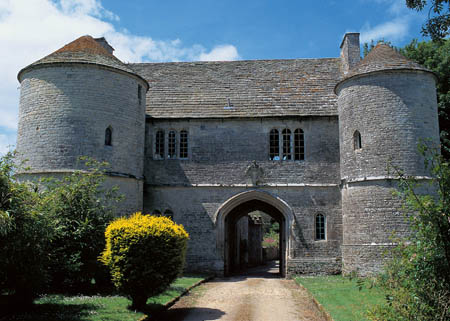
Briefly, the Trust restores noteworthy historic buildings and then rents them out to pay the freight.  It's a wonderful idea ... and the places are eclectic: everything from follies, to small castles, to modest fishermen's cottages.  Not often do you get the opportunity to stay in a medieval house ... or a castle ... or even where John Fowles lived in Cornwall for many years! Belmont House

As a concession to modern expectations, the restorations have conveniences such as effective heating, interior bathrooms and cooking facilities. Generally speaking, you will have the entire building to yourselves.  Some of the buildings accommodate two persons whereas others can sleep twelve or more. You can rent the premises for periods of the following duration: three or four days or weekly. Due to the popularity of the properties, it is advisable to make reservations well in advance.

We will be staying in four of the Landmark Trust properties on our next visit to England.  I'll describe them in a future post.

Here are a few examples of places on tap:  I've included an exterior and interior shot of each building.


Scale and Scalability - dimensions for evaluating potential investments


As one trained in geography, biology and the fine arts, I look at potential investments from a viewpoint which often differs from analysts who received their training in business schools.  In this post, I would like to address a few aspects of "scale" and "scalability".  The concepts are fairly simple on the surface.  In later posts I may expand upon some of the following basic concepts and also, expand the discussion to include more dimensions of "scale".

Impact

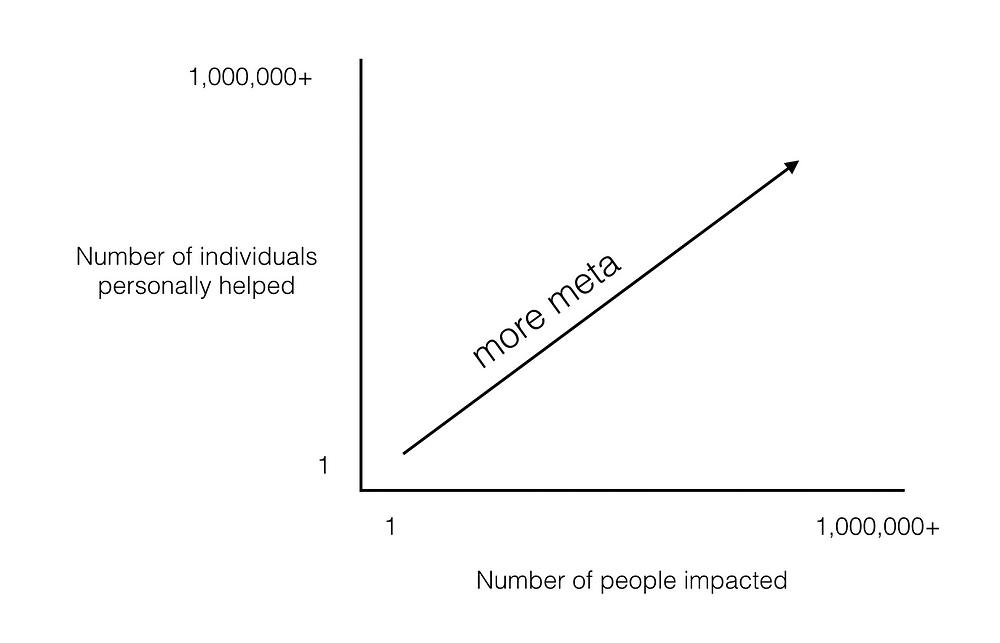
The following diagram was advanced by an entrepreneur who screens potential ideas by their potential to make a difference.  It is elegant.


The products and services of great enterprises have a global impact.  Tremendous profits can be achieved by investing in these beasts in their early stages i.e. Google, Microsoft.  It is extremely difficult to identify these opportunities, especially as the companies often have far-out, ground-breaking concepts which are unappreciated in the early going e.g. distribution models used by Fedex, marketing and distribution by Amazon etc.  

This is a tremendously powerful idea.  When searching for investment ideas, it often pays to push away from the table and think at a very high level.  This process often takes years; however, the "view" that emerges from such thinking can be extremely powerful.  Hint: don't look to think tanks and the bleatings of "futurists".  Look to the artistic community and outliers in society as these elements are often extremely sensitive to changes in the human condition.  

Scalability

Thank Heaven for Wikipedia!  Here is a very succinct overview of "scalability". 

Scalability can be measured in various dimensions, such as:

Administrative scalability: The ability for an increasing number of organizations or users to easily share a single distributed system.

Functional scalability: The ability to enhance the system by adding new functionality at minimal effort.

Geographic scalability: The ability to maintain performance, usefulness, or usability regardless of expansion from concentration in a local area to a more distributed geographic pattern.

Load scalability: The ability for a distributed system to easily expand and contract its resource pool to accommodate heavier or lighter loads or number of inputs. Alternatively, the ease with which a system or component can be modified, added, or removed, to accommodate changing load.

Generation scalability refers to the ability of a system to scale up by using new generations of components. Thereby, heterogeneous scalability is the ability to use the components from different vendors.[4]

Note:  I will add to this article over the next few days.  It is my first post that is published on the fly - an experiment.  

Thursday, 16 March 2017

Habits of Millionaires ... and an important footnote

I've read a great deal about wealth management and have tried to incorporate key gleanings from that reading into my approach to life.

Of course, the key to a "successful" life entails far more than having a fat purse ... but it certainly helps to have the wherewithal to pursue a "rich life".

Here is a cogent summary of the habits of wealthy people who have accumulated wealth through their own efforts:

The Top 10 Habits of Millionaires

There is a common thread to many of the habits; namely, "to invest in one's self". It's perhaps the single most important thing a person can do.

The Importance of Learning How to Invest

In our early years, my wife and I lived off one salary - the other one was banked. Our salaries were modest, but we reached the point where we were able to put 50 percent down on the purchase of our first (and only) house.  We paid it off a little more than 3 years later.

Our biggest mistake thereafter, I call it the "lost decade and a half", was not to invest our savings in a meaningful way.  Instead, I relied on others and parked most of our grubstake in mutual funds.  Further, we lessened our savings rate.

Then, things changed significantly: a new government came in and implemented massive cuts to the civil service where I worked.  I had the misery of giving notice to 35 percent of my staff.  There was no assurance that I would not be next as the axe continued to fall.

I resolved from that point forward to gain a measure of financial independence: to be in a position to have the resources to retrain and start a business of my own in the event of a firing.  From 2:00 to 4:00 AM every day, I worked on learning how to invest.  After 8 years, I was making more from that than from my wages - this despite several promotions.

At first, I hated the activity, but soon I became captivated by the thrill of learning new things, the psychology of investing, and the "hunt" for potential investments.

In so-called "retirement" from the wage economy, I still find great satisfaction in investing activity.  Further, it has enabled us to pursue many new interests and to assist family members in starting new businesses.

One of the best things you can do for your kids is to give them a strong set of values to live by.  Helicopter parenting is an anathema: more than ever, kids will require resilience and a strong sense of self in order to cope with a world which is changing rapidly.  And I would argue that the skill sets and approaches which sustained parents through their early years may be insufficient to meet the challenges of the "new world".

This said, values are enduring - it's just that kids will have work out how they are expressed for themselves.

One of the key values is embedding in one's kids, the approach of being successful financially, hence this post.

Evaluating Mine Development - A Short Post

I have written previously about investing in mines, primarily those focused on gold and silver.

My criteria are fairly simple:

  • the quality of management is key
  • stable geo/political jurisdictions - I never stray 
  • located in areas with good supporting infrastructure (financial, logistical, personnel)
  • strong balance sheets 
  • preference for working mines or those which can be "de-mothballed" fairly quickly
  • the prospect of markets which make operations profitable

It's always useful to review one's approach and refine it as appropriate.  Here's another group of considerations.  I'll not steal the punchline: the article is short.

Getting Big Mining Projects Right

Wednesday, 8 March 2017

Clean Seed Capital - starting to sprout

I have written a few posts about this start-up company.

Briefly, CSX has developed the CX-6 Smart Seeder.

The SMART Seeder™ offers an unrivaled level of precision in modern no-till seeding. This drill demonstrates the future of farming.

Clean Seed has developed an advanced precision no-till seeding system comprising several individually patented technologies, including in-ground openers, proprietary seed and fertilizer metering, and electronic control systems. Our most recent ground breaking achievement is also our most advanced and innovative to date: the award winning CX-6 SMART Seeder™, which is an industry first!

It represents a major advance in seeding technology for large scale farming operations:

  • can plant seeds at variable rates very precisely in order to fulfill the requirements of precision agriculture
  • has the capacity to deliver other products (e.g. fertilizer, pesticides) simultaneously and at variable rates
  • it enables farmers to practice intercropping to increase yields and profits http://us7.campaign-archive1.com/?u=07f7d9dee595a47b1c531c8f4&id=dc42a7d073&e=6ffb8de420
  • has a modular system whereby malfunctioning parts can be replaced quickly in the field

More detail is provided here. 

http://www.cleanseedcapital.com/home

I was privy to a confidential report on field tests of the prototype and it was superior to anything on the market.  (I obtained this by writing to the President to learn more about the technology - this when I was evaluating a potential purchase of stock.)  Since that time, the SMART Seeder has undergone additional field testing in a variety of conditions/geographies.

In recent years, the company has developed a production capacity by means of an agreement with a respected equipment manufacturer and has also entered into distribution agreement with Rocky MountainEquipment, a company which I established a position with several years ago.
https://www.rockymtn.com/

Recently, Clean Seed made the following announcement:

February 23, 2017 - Vancouver, British Columbia - Clean Seed Capital Group Ltd. (“Clean Seed” or the “Company”) (TSX-V: CSX) has entered into a distribution partnership agreement with Torgerson’s LLC (“Togerson’s”) to bring its CX-6 SMART Seeder™ technology to the United States through 1) an exclusive dealership arrangement for Montana and North West Dakota 2) the creation of a CX-6 SMART Seeder™ demonstration centre and 3) providing a base for further expansion into other key US markets.
http://www.cleanseedcapital.com/blog/post/clean-seed-capital-group-tsxv-csx-enters-the-united-states-market-through-new-strategic-alliance-and-closure-of-associated-investment-1

I have great expectations for Clean Seed:

  • It has been able to secure financial support at all times and has no debt.  
  • It has progressed in a very deliberate way, building its technology and the supporting infrastructure to bring its product to the marketplace. 
  • Management is communicative: I received a response from the the President within hours of writing him by e-mail.  The response was fulsome and direct.  
  • Clean Seed's team has "mud on its boots" and strong links with the farming community.  
  • It appears from recent additions to its Board, that the company is clearly positioning itself for expansion into additional markets. 
The investment has required patience and a recognition that the path to success has many twists and turns:
  • It is common for stock prices in new ventures  to gyrate significantly (and it certainly has)
  • New ventures require agility: a willingness to bring new people on board to build management capacity as the technology develops and to bring it to the marketplace  (Clean Seed has done this in spades)
  • Many technologies fail because they do not bring quantifiable benefits to customers.  It would appear that the field trials have demonstrated this effectively.  Farmers tend to be "show me" people and are loath to accept the blandishments of slick "suits".  
Here is a synopsis of four keystones for the success of agricultural start-ups.  It would appear that Clean Seed has the "right stuff":

This said, there are a few issues with the potential affect the fortunes of this company:
  • Trump trade policies
  • the state of the agricultural cycle (my sense is that we are near/at the bottom of the cycle and that things will improve over the next several years)
  • manufacturing glitches and the inevitable issues in the field which arise with the advent of new technologies (operator error, equipment deficiencies)
  • competition: Clean Seed is a new entity and must compete with well-established companies with deep pockets and long-standing customer relationships.  
  • in the short term, it is getting more difficult for farmers in the Mid-West and elsewhere to secure financing for equipment purchases given a regime of low prices for crops such as corn and soybeans https://www.farm-equipment.com/articles/13760-deu
To my mind, there are two potential scenarios regarding the future of Clean Seed:
  1. Organic growth: a slow process whereby the company grows its market and adds other products over time.  
  2. Take-over by a larger corporate entity.  Case IH comes to mind as its product line is carried by Rocky Mountain et al.  
My bet is on the second scenario, although I would prefer to watch Clean Seed develop to the point where it could command a higher price point.  

I have steadily added to my position over time as the company has passed various milestones.  The additions have not been affected by the stock price of the moment, a rather silly way to make one's investment decisions with beasts of this nature.

Strategic Positioning of Clean Seed

When searching for potential investments in agricultural equipment manufacturers, I looked for, among other things, products which "fitted" best with emerging trends - in this case - the growing presence of larger farming operations.  The CX-6 Smart Seeder is clearly aimed at this market.  Read this. (You can drill down more by clicking on the links internal to the article.)

https://www.farm-equipment.com/articles/13828-deu

A New "Advance" in Nuclear Weaponry Poses a New Threat to Russia ... and everyone else

The U.S. has developed a new technology for fusing its nuclear warheads.  In brief, it enables the more accurate delivery of warheads over targets with the result that it has reduced the number of warheads required to neutralize hardened targets such a missile launch sites and control centres.

This has major consequences as it would appear that a "first strike" by the U.S. can be far more devastating ... and potentially, more "attractive" for those with the mentality of Dr. Strangelove.

It is also important to recognize that with the advance positioning of American nuclear submarines, delivery times have been reduced.  This is aggravated by the fact that Russian technology for the detection of incoming missiles provides only a fifteen minute window from the point of detection to the time of impact.  (The Americans have an advantage in that they have a satellite array which provides a thirty minute window.)

The following article provides a chilling portrait of this scenario.  It does not mention the growing capacity of the U.S. with respect to missile interception.

http://thebulletin.org/how-us-nuclear-force-modernization-undermining-strategic-stability-burst-height-compensating-super10578

The bottom line is that decision-making time for responses to perceived threats on the part of Russian operatives has been compressed.  The consequences of these decisions are probably more monumental than at any time in history.

Wednesday, 15 February 2017

Value of the "Long View"

Over time, I've come to appreciate the rewards associated with taking the "long view".  In short, it's all about selecting great companies and holding positions in them for the long term.

In selecting potential investments, I generally look for the following characteristics:

  • solid management: experienced in the field of endeavour; successful track records, ethical and unblemished by scandal; working in the interest of share owners
  • solid balance sheets: little debt; strong cash flows; good ROI
  • understandable business model 
  • competitive advantage
  • an enduring market for the company's products/services
As to the long term, I am patient with respect to an entry point for my investments.  As Herr Buffet would opine, it's about waiting for the "fat pitch". Some people may contend that this is akin to "market timing" i.e. trying to anticipate the direction of the market.  

I do not.  Sometimes, market sentiment results in widespread market declines based on fear of loss.  If anything, a study of historical price trends shows that companies with the above-noted attributes are very resilient: they eventually recover and prosper to the delight of investors who invested when others were paralyzed by uncertainties of the day.  

I have the sense that market valuations are getting rather lofty in today's environment: that optimism of the Trump effect is causing markets to rise in an unwarranted manner.  I am slowly building a nest egg and am prepared to wait for markets to correct.  I believe that the chaos in Washington is going to spill over into the markets.  Markets will become quite volatile and will present opportunities for investors who are positioned and prepared to profit from volatility.   

This post was stimulated by the following presentation.