Tuesday, 12 April 2016

Why I Never Read Reports from Financial Analysts - Updated

I recently attended a very interesting micro cap investing conference in Toronto.  Approximately 35 companies made investor presentations.  I will write about a few in them in a subsequent post.

A very interesting part of the conference was meeting other investors and listening to their questions following each presentation with the purpose of studying their thought processes.

All of them were very well educated people and most had significant experience in the financial industry.  I was struck by a few things:
  •  Their questions were predictable.
  •  For the most part, they focussed on financial metrics and competition.  
With a few exceptions, they paid little attention to what I consider are the most important aspects of evaluating a potential investment:
  • There was not one question about the quality of management.
  • I was the only person who asked about staff retention, a key element to the success of small knowledge-intensive enterprises. 
  • There were only two questions about the strategic positioning of a company - this despite a long runway that was provided by company executives who had sweated bullets about this key element of a business plan.
  • There was hardly any attention paid  to marketing - either to the investment community or to consumers of a company's services/products.  To my mind, this is astonishing, especially when the company presenters had frequently mentioned this.  
I came to the conclusion that most analysts do not conduct their due diligence from the perspective of an owner/operator.  In part, this was due to the fact that most of them had never run a business .... or ... perhaps in their role as financiers or analysts, their perspective changed to the textbook MBA template.   

Further, the foundation of many questions was based on metrics which looked at investment risk.  This is a subtle point.  For example, some companies had made some major strategic adjustments in order to survive.  Not once did the concept of resilience arise.  To my mind, the capacity of a company to shift its focus is a very positive attribute - something to be treasured and which cannot be measured on a balance sheet. 

I was also struck by the narrowness of many "suits" in terms of their perspective.  They simply lacked the ability to think about how companies are perceived by other than the professional investment community.  

A case in point was Input Capital.  I discussed the company with an experienced professional investor.   He made two remarks:
  • noted that the company had lost a major streaming contract that went south
  • that why would he invest in such as company as he had great expertise in commodity trading - why engage the services of Input Capital?
I was too polite to take him to task at the table but here is my take:
  • It is expected that young companies will encounter glitches along the early road, particularly those with pioneering business models.  I informed him gently that Input quickly moved to tighten its due diligence and to reduce the size of streaming contracts - also that it had negotiated many more contracts thereafter.  I was impressed by the ability of the company to learn and adjust its practices.
  • As to the "why" of investing in a company, the man was blinded by his outlook.  He looked at the company from a strictly personal point of view and ignored the possibility that others might have a different outlook.  To my mind, the company provides a retail investor with diversification to agricultural commodities (in this case, rape seed) and also the potential for gain due to the profitability of the company.  He is entitled to his opinion as I am to mine ... and thank heaven for that. As my father-in-law used to opine:  "That's why they make Fords and Chevs."  
In my approach to assessing an early-stage company, I admit that I focus primarily on the "softer" side of things:
  • quality/integrity of management
  • ability to learn and adjust and resiliency
  • strategic positioning 
  • robustness of the business model
  • customer benefit
  • intellectual property management
  • marketing
On the harder side, I look at:
  • balance sheet
  • burn rate
  • access to funding (internal, external)
  • market potential
I also look for catalysts with the potential to change a company's outlook for good or bad.  

In the end, it is people who determine the future of a business.  An idiot with money and good financial metrics is useless.  A genius without money usually finds ways to surmount issues, including things financial.  To my mind, the present state of the financials of a young business represents but a small aspect of a company's potential.

Most analysts appear to give short shrift to the human element and that's why I do not read their reports.  As to their projections of future earnings ... well ... the ancient Greeks probably had a better methodology by appealing to the Gods.  Besides, the cost of bringing a goat to the altar was probably much cheaper than the fees charged by today's temples of finance.  See Oracle of Delphi

OK.  This is has been a rather harsh indictment of template thinking but I advanced the argument this way in order to make a point about analysis by rote - the stuff which litters the field.

I do read several financial blogs.  The best of them advance a more informal style and reflect the individuality of their authors.  In reading them, I am more interested in the authors' thinking process - how they adapt their thinking to the needs of the moment.  The best of them have an ability to zero in on the most important considerations which contribute to the "investment worthiness" of an enterprise.  That is the real art of financial analysis.

One Last Observation

Do the analysts' recommendations make a difference?  The answer is "no".

For decades, researchers have reported that post-revision return drift, or PRD, moves in the direction of analysts’ recommendation revisions; this is to say, PRD is typically positive following upgrades and negative following downgrades. New evidence provided in this article shows the disappearance of significant average PRD that agrees with analysts’ revisions, in the 2003-2010 period. ...

The findings add to the empirical evidence about analysts’ information intermediary role in the securities market. They do not support the view that analysts’ reports consistently provide the typical investor with useful new information about long-run stock price behavior, which complements recent research suggesting that analysts’ reports generally provide little new information for investors in the short-run. They also suggest that it could be difficult for analysts to provide useful new information for ordinary investors in a low transaction cost environment. 

Read the full paper.  Can analysts predict stocks for the long run? 

Tuesday, 5 April 2016

Investing in India - Fairfax India Holdings Corp (FIH.U)

In recent weeks, it would appear that the market is awakening to the potential of this investment.  It's all about the quality of management and the potential of India.  I established a position in December 2015.  I chose this vehicle over ETFs and mutual funds as I considered that Prem Watsa and his team had a competitive advantage: a record of success, strong connections with India, an embedded knowledge of the country with "boots on the ground" and direct ownership of a variety of enterprises.

The recent annual report is worth reading in its entirety.  It it well written and outlines clearly, the strategy which has been adopted by Watsa el al.
http://s1.q4cdn.com/293822657/files/doc_financials/annual_reports/Final-2015-Annual-Report.pdf

My interest in investing in India is premised on its potential for growth:

  • a favourable demographic – population structure, size, 
  • a sense that its political culture is recognizing the need to support more favourable policies in the business sector
  • a growing presence in some sectors: steel, knowledge-based industries such as IT
  • some very strong universities which can recruit the “best of the best” drawn from a large population (I believe that national averages for level of achievement in higher education are not really good measures of a nation's intellectual capacity as it is the 5 percent which account for more than 60 percent of intellectual advances.)
  • a growing belief in the country that India has the capacity to compete globally and strong connections with other parts of the world due to extensive migration

India has some major challenges such as barriers to full participation in social and economic life due to the legacy of the caste system, and a poorly developed infrastructure, etc.

Despite this, I believe that India will be a more attractive investment over the long term than China for a variety of reasons:

  • It has a more effective way of accommodating differing viewpoints, interests and grievances.  China's one party system and the culture in its governing class of “having its way” with a high sense of impunity will ultimately be problematic.  (In meeting with Chinese officials on a few occasions, I noted this when the discussion moved to the role of government in the process of economic development.  They were mystified why things took so long in Canada.)  When controls are imposed from the centre or where decisions are controlled in an hierarchical system, political and economic systems can rupture suddenly.  
  • Its demographic structure is more attractive. 
  • Its geographical position vis a vis trade routes appears to be more favourable.  

I addressed the thesis at greater length in an earlier posting. In the course of my on-going reading, I encountered some very interesting articles.  The following article presents some interesting comparators:

Why India is Still Playing Catch-up to China

After reading the article, I explored some of its references and found this wonderful site: Trading Economics:

Trading Economics provides more than 300.000 indicators for 196 countries, including economic data, exchange rates, bonds, stocks and commodities. During the last five years, we had more than 100 million page views from more than 200 countries. Interestingly, we rank second to none in many economic terms in Google or other search engines which make us a valuable asset for firms interested in saving in advertisement and generating more attention-grabbing leads. In addition, unlike many startup companies, our net profit has been positive since the first month we were open for business. Our fixed costs are low and our revenues are very solid and trending higher. Nearly 80 percent of our revenues come from recurring subscriptions and 20 percent comes from advertisement on the site.

This is a great site.  It is a wonderful way to “take the pulse” of a country.  OK, I admit that I'm a bit of a wonk for this stuff provided that I dive into the statistical pool with a perspective to guide my wanderings.  I use the stats to test my theories/impressions; otherwise, it would be time wasted.

And speaking about statistics, one of the first things the federal Liberal government did following the recent election in Canada was to restore the long form census.  This reversal of a ignorant, ideologically-driven decision by the Harper government is welcome.  Some readers may know that the voluntary census invoked by the Harper government was inferior in its coverage and reliability and cost $ 30 million more than the previous long form census ... shameful.  The grisly tale is recounted here:
Canada has lost its census anchor

Statistics Canada is one of the most highly regarded agencies of its type in the world.  It has a culture of the "neutral view" - a tradition of providing reliable information without imparting a political interpretation.  In my view, one of our national treasures. 

Saturday, 2 April 2016

Making Sense of Health and Wellness Literature - A Framework for Developing a Personal Action Plan

Purpose of this Commentary

This is a report on my thinking to date about what and how to research about health and wellness with the aim of developing a regime to:

  • improve my general level of fitness 
  • contribute to improved performance, enjoyment and safety while engaged in specific activities such as long distance walking
It will set out a framework which sets priorities for research and organizes the findings in a way that can be translated into a series of specific actions on my part to achieve some specific objectives.

I am not motivated by thoughts of prolonging my life as I've grown to appreciate the significance of accidents and chance which often have a greater influence on one's longevity than "good intentions" translated into action.  Rather, I am interested in measures that will improve the quality of life by enabling me to engage effectively in a variety of activities ranging from basic things such as sitting, walking and sleeping to more directed pursuits such as skiing, long distance hiking etc.  

Introduction


When I started to read about health and wellness a few years ago, I was confronted with a bewildering array of information:
  • The array of subject material is vast - everything from dietary regimes and nutrition to the influence of swearing during high performance activities.
  • In recent decades especially, the literature on health has exploded.  It is simply not possible to even consider sampling but a smattering of the sources e.g. when I Goggled "cardio vascular health" I got 3.5 million hits; 714,000 hits for "plantar fasciitis"; and 2.4 million for "barefoot running".  
  • The quality and reliability of the information is variable - who and what to trust?
 A Commentary on the Literature (excluding the "quackery" and "beyond the fringe" stuff)

There is a bewildering variety of science-based studies.  Sadly, most of them are focused on "learning more about less" - a reductionist approach which misses the forest for the trees.  In part, this is driven by the quest for "originality" and scholarly reputation. It is also an outgrowth of the sheer number of graduate students and post-doctoral fellows looking for something to occupy their time. In some instances, it is a product of research which is intended to give high performance athletes that "extra edge" in high level competition, an activity where fractions of a second make a major difference.  (I'm not too interested in that stuff as I'm not in that league and further, the pursuit of those exercise routines can do real damage to people who are not trained to extreme levels.)

Most of the academic studies are  short-term in nature and limited in scope.  Sample sizes are often small with the result that it is difficult to achieve a meaning measure of statistical significance.  In my experience, this is the product of funding limitations and/or time constraints.

Also, authors are driven to publish results before long-term findings are in hand - a product of the "publish or perish" syndrome.  

Study methodologies are not standardized, meaning that it is difficult to compare or replicate results.  For example, many studies of exercise/diet regimes purporting to improve health and fitness are conducted with untrained subjects whose responses differ from trained or fitter individuals and visa versa.  

Those generalized, long-term population studies which exist, while interesting, only provide "averages".  It is difficult to extrapolate findings to the circumstances of an individual.  For example, an individual's response to an exercise regime varies from the general population in relation to a myriad of physical factors which simply cannot be embraced in generalized population studies.  This is complicated further by factors such as a subject's attitude and life style.  

It is difficult to separate out the "important" from the least important findings in terms of relevance to one's personal situation and needs.  For example, there is a growing body of literature which focuses on seemingly minute matters which authors claim could make the difference between winning and losing in the game of high performance athletics.  For "average Joe's and Jill's", I suspect that most of this stuff is not relevant. 

My Conclusion

I realized that I needed conceptual framework to direct my future reading in order to:
  • maximize the useful return on reading time
  • organize the findings into a mental framework in order to provide context and a basis for taking action on the findings
  • priorize my reading to topics which are most applicable to my personal circumstances (life style, needs and expectations)
Preliminary Steps to Developing a Framework

Here is the approach.  It is not sequential.  Rather it is adaptive. It will change as new information becomes available.  The following is premised on the guideline that I will read only science-based, peer reviewed literature.  

1.   Comprehensive Overview
Some books provide an overview of the "playing field". They are useful in that they provide a perspective of how authors approach the topic and organize their thoughts.  This is invaluable as "how" one thinks influences "what" one reads.  I find that I am more comfortable with some "mental frameworks" than others.  For example, I much prefer science-based insights as opposed to more experiential viewpoints.  While I consider myself a spiritual person,  at this stage, I find myself more interested in the "what's, why's and when's".  I figure that I'll evolve into the more philosophical aspects through the process of "doing".

2.  Assessment of Personal Needs

In brief, it involves an identification of wants, needs and desired outcomes in response to an assessment of lifestyle, expectations for the future, and other considerations.  In essence, the "list" will assist in identifying specific areas for future research and setting priorities. 

3.  Focused Research

This where several themes identified during the aforementioned processes will be identified and explored.  I will assign a relative priority on the topics based on my personal needs and some of the comprehensive reading.

The comprehensive reading is useful for "building the base".  For me, this entails an examination of general items which are vital to the function of the system as a whole:

  • cardio-vascular health and the associated elements of endurance, "heart health", 
  • breathing: 
  • balance
  • posture 
  • efficiency in movement (Alexander method)
  • flexibility (not for its own sake, but for specific activities which are identified later)
  • vision (I am interested in exploring an eye exercise technique used by my brother to "graduate" from the use of reading glasses)
  • sleep 
There are specific activities that I want to pursue for two reasons: preparing myself to meet the physical demands specific to each activity; and, minimizing the chance of injury:
  • walking ("foot fitness", efficiency in movement)
  • swimming (cardio, endurance, efficiency in movement)
  • snowboarding/skiing (strength, endurance, balance)
  • sitting at the computer keyboard, piano (posture, hand/arm strength and flexibility)
  • lifting and other movements associated with general tasks and activities such as canoeing, house and yard work: strength, balance, efficiency and safety of movement, injury prevention
  • bicycling (endurance, efficiency of movement)
Many of the aforementioned activities have overlapping requirements and are also related to the general items noted previously. 

4.  Thinking about Implementation

This is the most important part.  I hope to develop a regime where I can "build the base" in a time efficient way and have time to focus on some of the specific needs associated with activities such as skiing.  In part, this can be done on a seasonal basis e.g. ski preparation starting in the late fall, cycling in the late winter, although a stationary bike could also be used throughout the year as a warm-up preparation for daily exercise.

This is premised on the expectation that a commitment will be made to follow the plan.  I've learned that after the initial three hard weeks, that an hour or so a day soon becomes a habit - also that much of the implementation does not have to take place in a gym or pool e.g. balance can be incorporated in daily activities such as putting on one's socks while standing on one leg with eyes closed. A major part of my knee strengthening takes place while watching TV, ditto for hand stretching exercises for the piano.

In a series of posts, I will report on my progress.  It will be akin to "notes to self".  

Sunday, 27 March 2016

Great Post on the Business Model for Credit Cards

Once in a while, I encounter a great post.  This is one of them:

Welcome to Adult Life”: American Express, Synchrony Financial & the Changing Credit Card Landscape

Two years ago, I investigated the moat around American Express’s (AXP) business.  I assessed the moat as wide and identified a positive feedback loop at the heart of it.  The loop ran like this:


  1. Spending on Amex cards is higher on a per-card basis than its competitors
  2. Merchants want to accept the Amex card to attract these high-paying customers
  3. This affluent customer pool enables Amex to charge higher discount rates
  4. Because of the revenues generated from higher-spending Cardmembers, Amex has the cash to invest in more attractive rewards and other benefits to Cardmembers
  5. The rewards program in turn creates incentives for Cardmembers to spend more on their Cards.


The post goes on to look at the competitive landscape for credit cards with a special focus on Synchrony Financial (SYF: NYSE).

It is absolutely fascinating - a clear-headed, logical analysis of the playing field ...  beautifully written by a person who is in command of his craft.  

The post appears on Punch Card Investing, one of the best of its breed.  

Punchcard's focus?  Dedicated to the Exploration of Moats and High Quality Businesses

You can subscribe to the blog through e-mail, Twitter, RSS etc.  

It is so good that I read every post.

ps  I looked at SYF about a year ago and decided to pass.  While its business model was engaging, there are other companies with more attractive possibilities.  

Looking for an interesting business model? Investigate Input Capital, one of the first agricultural streaming companies in the world.  Here is a quick primer on the model:
http://s1.q4cdn.com/584800959/files/doc_downloads/CGW141111-edit.pdf

I wrote about it in an earlier posting in The Financial Passage Maker.  Company management has demonstrated an ability to respond quickly and effectively to setbacks.  The capacity to learn and respond is an attractive attribute which is lacking in many enterprises.  In the end, companies are all about people - something that many financial analysts often forget.  

Saturday, 26 March 2016

Use Your iPad for Design Projects - A Design Innovation

For many years, I have used CAD (computer assisted design) programs to plan out projects for the home and boat.  The learning curve was sometimes steep, especially in the early days of these programs.

In recent years I have used SketchUp to plan a variety of projects, including a major renovation of the galley on our trawler.  The ability to visualize the plan in 3D was especially useful. It is a powerful program.

http://www.sketchup.com/

I subscribe to WIRED, a publication which focuses on the impact of emerging technologies on society.  You can subscribe to e-mail versions of its offerings (free) or pay a reasonable fee for a full subscription.  It is one of my go-to sites for emerging ideas.

http://www.wired.com/

From WIRED I recently learned about a new entrant in the CAD field, Gravity Sketch.  It marks a new development:

Gravity has embraced 3-D printing as the logical output of the app, but frankly, that seems to be the least compelling use-case. Looking forward, Gravity is essentially preparing people to use a new gestural language for creation that it will carry through to more advanced VR and AR products. And the idea that anyone, not just professionals, can sketch a 3-D object with scant technical knowledge will grow increasingly important. As virtual and augmented reality become more commonplace, it’s easy to see how everyday communication could shift from two to three dimensions, too. Five years from now, it won’t just be developers who need literacy in this space—it’ll be everyone.
http://www.wired.com/2016/03/gravitysketch-3-d-software/

To learn more, look here:

https://www.gravitysketch.com/

The transformation of designs into hold-in-hand creations is done by Shapeways.  Look here to see the possibilities.  As you will see, Shapeways offers a variety of programs to assist the with the design of a wide variety of projects.

http://www.shapeways.com/

As always, I look for alternative approaches to issues - in this instance, 3D printing.  The Toronto Public Library system is one of the best in the world.  Consistently, it has demonstrated an ability to adapt.  Years ago, it stocked books and other materials in many languages to meet the demand of the city's multicultural mosaic. (Did you know that 50 percent of Torontonians were born outside of Canada?) The system has been in the forefront of functioning as a community hub and in the delivery of new services which have expanded its horizons well beyond the world of books.  The focus is on the democratization of access to knowledge.

One of the services offered by the system is 3D design and printing.

http://www.torontopubliclibrary.ca/using-the-library/computer-services/innovation-spaces/3D-design-print.jsp

Is in no wonder that the per capita use of Toronto's library system is the second highest in the world?  It is one of the reasons why this city consistently rates among the best places to live.

Friday, 25 March 2016

Financial Passage Maker - March 2016 Edition

March 2016

The Financial Passage Maker

The Voyage

1.    The Financial Log Book

The table now shows the relative weightings of holdings in the portfolio.

2.    View From the Masthead

I figure that it is time for caution: the first rule of investing according to Herr Buffet is “not to lose money” ... ditto for the 2nd and 3rd rules. Prem Watsa has penned a cautionary outlook in his annual letter to shareholders.

3.   View From the Gun Port

No new purchases with the exception of short-term speculative ventures in gold companies. I have increased my stake in a few companies.

4.    Recommended Reading for the Moorings

The Big Book of Endurance Training and Racing by Dr. Philip Maffetone is well worth reading, especially by people who are interested in functional bodies.

5.    In the Wake

A substantial review of my portfolios is underway in preparation for what I consider will be “interesting times” ahead.  (See also View From the Masthead.)

Investments are only an enabler for the most important things in life: family, friends, health, travel, music (more on that in a future newsletter) and all manner of learning and exploration.


1.    The Financial Log Book 


Entity
Wt
Initial Price/ Purchase * Date Price *
March 24/16
Gain/Loss
since Jan 1/16
%
Gain/Loss
Since Purchase
%
Silver Wheaton
(SLW)
H
12.37
2007-09-04
22.82
32.7
84.5
Polaris Materials Corporation (PLS)
L
10.70 **
2007-06-01
1.5
-2.6
-85.9
Cenovus (CVE)
M
32.39
2010-07-27
16.89
-3.5
-47.8
North West Company (NWF)
H
16.23
2009-05-07
29.26
3.2
80.3
Deere & Company (DE)
M
88.07
2013-01-03
80.24
6
-8.9
Rocky Mountain Dealerships (RME)
M
11.89
2013-01-03
5.81
-6.9
-51.2
HollyFrontier (HFC)
M
47.95
2013-01-28
35.33
-10.6
-26.3
Oak Tree Capital Group (OAK)
M
56.45
2013-10-28
46.93
-0.7
-16.8
Fairfax Financial Holdings (FFH)
H
477.98
2014-3-25
715.9
11.2
49.8
Clean Seed Capital (CSX)
L
.51
2015-01-07
0.49
-21.9
-3.9
Abitibi Royalties (RZZ)
M
2.57
2015-11-20
3.65
8.8
42
Input Capital (INP)
L
1.86
2015-11-20
1.63
-8.4
-12.4
Marquee Energy (MQL)
L
.49
2015-11-23
0.39
0
-21.3
Fairfax India Holdings Corp (FIH.U)
M
10.42
2015-12-16
10.59
4.9
1.6
CRH Medical Corp (CRH)
L
4.43
2105-12-29
4.18
1.9
-5.6

*    Prices are quoted in the currency of the exchanges where equities are listed.  As a result the gain/loss is not an accurate measure of the performance of the portfolio as the $US has risen significantly against the $=Cdn since many US positions were established.
** does not reflect impact of a large follow-on investment @ $.67 per share

A new feature is an indication of the relative weightings of holdings in the portfolio:
H = >10%
M = 5-10%
L  = <5%

In general, my strategy is to invest relatively small amounts in small, fledgling enterprises and then to increase/decrease my stake on the basis of performance.

Not shown on the chart is an old favourite, Questor Technology Inc, my first ten bagger.  I sold it off for a great profit but have renewed and gradually increased my position.  I am hopeful for a nice profit as the company's new offering makes its way into the market.  It's always nice to see a company able to finance acquisitions and product development without recourse to debt.  The stock was crushed when oil prices declined but its value is now being recognized by the market.  Questor's recent performance has been gratifying.  I figure that the good times will roll once again. Read more about it here:
http://www.questortech.com/

Agriculture

The depressed $Cdn has increased the effective cost of American-made equipment prices for Canadians.  This, coupled with farmers' reluctance to spend cash for new equipment in the face of challenging commodity markets, has had an impact on new equipment sales.  The share prices of Deere and Rocky Mountain Dealerships have been affected negatively.   In my view, the current state of pessimism represents an opportunity to secure additional shares on the part of investors with the longer view.  Both companies are very well managed and have been through the peaks and valleys of the agricultural commodity cycle before.  Analysts with shorter time horizons seem to ignore this history ... and market “talking heads” are even worse ... seems as if ADD is a requirement for market commentators.

It will pay to wait for the cycle to repeat itself.

  • There are more mouths to feed in the world.
  • The demand for grains will increase as a result of growing global prosperity and the role of grains in the diets of affluent societies.
  • The spectre of greater variability in crop performance in the future due to climate change will probably be beneficial to farmers in most of Canada's producing areas – this in comparison to other parts of the world where droughts and floods are likely to be more severe.
  • In some parts of the world, such as India and California, the mismanagement of water supplies and competition for water presents substantive challenges to the viability of traditional agriculture, thus opening the possibility of new opportunities for Canadian farmers.
  • Socio-political strife and massive corruption in places such as Brazil has the potential to disrupt the movement of agricultural products to world markets.  

I have increased my stake in Input Capital (INP).  Read the following third quarter report to see why:
http://s1.q4cdn.com/784243260/files/doc_news/Input-Capital-Corp-Announces-Fiscal-2016-Third-Quarter-Results.pdf

Investors in new companies must be prepared for inevitable up's and down's in performance.  Sometimes, people over-react to setbacks.  A few months ago, the price dropped due to concerns about a few streaming contracts which had gone south.  The company adjusted its practices very quickly and achieved some positive results thereafter as noted in the third quarter report.

In my view, the most significant challenge ahead for INP is how it develops a strategy to sell its streams into an “interesting” commodities market.

The Oil Patch

The following commentary by Leonardo Maugeri provides a sobering perspective on the current state of the oil industry.  The Global Oil Market: No Safe Haven for Prices

Despite the decline in price, actual production of oil seemed to defy the laws of gravity and economics as it continued to grow. Once again, the main reason for this apparent contradiction is that while many companies and countries announced cuts to their spending budgets, very few actually halted investments already under way in the upstream sector. Many are just beginning to register production from recently completed investments, while others are completing their investments, after having spent the bulk of their capital budgets. The result: production capacity and the supply of oil will continue to grow.

... the conclusion?

... unless demand growth actually explodes—which seems unlikely—the fundamentals remain the same: in spite of some erosion of production here and there, global oil output, production capacity, and inventories will remain too high versus the level of consumption growth. This implies that the downward pressure on oil prices will remain the dominant force in 2016, with the first real inflection point for the market, which could probably materialize only in 2017.

I think Maugeri may have underestimated the potential for geopolitical uncertainty to destabilize oil production and transport, especially in the Middle East.  To my mind, it remains as the wild card.

Also, the industry is cyclical.


I don't believe for a moment that the world will wean itself off oil any time soon.

  • The infrastructure for discovery, extraction, transportation, distribution and use is very well developed.  Competing sources of energy lack this infrastructure and it will only be developed at the considerable expenditure of time and money.  The fossil fuel system is reliable – the product of over a century of trial and error.
  • Businesses and other energy consumers are by nature conservative: risk adverse to new technologies, set in their ways and generally with no compelling reason to change.
  • Other than the possible exception of solar-generated electricity, other non-fossil fuel technologies generally have had major challenges: higher than anticipated all-in costs, confusion caused by a plethora of competing emerging technologies without any clear leader.

The shift in the mix of power sources will be evolutionary rather than revolutionary.  There are still rewards ahead for investors who recognize this circumstance.

Precious Metals

Speculative activity has been very profitable in the face of an increase in the price of gold and silver in recent months.  I've learned to take profits of 3 to 20 percent as opposed to hanging on for more.  As a result, I have made a nice series of “base hits” by making short-term bets in several companies:

Dalradain Resources
Goldquest Mining
Asanko Gold
Premier Gold Mines
McEwen Mining
Oceana Gold

The market action has been fairly choppy, a circumstance which presents opportunities for short-term speculation.

http://www.kitco.com/charts/popup/au0365nyb.html

The long-term trend for gold is somewhat ambiguous.  I believe that its price is a barometer of fear and  an indicator of the value people place on its utility as a safe haven in the face of geopolitical uncertainty and misgivings about the “true” worth of fiat currencies.

http://www.kitco.com/charts/popup/au3650nyb.html

History tends to repeat itself.  In light of this, and as a form of “speculative insurance”, I have maintained some long-term core holdings, mainly in streaming companies:

Silver Wheaton
Franco-Nevada Corp.
Abitibi Royalties

The last company, RZZ, has been a very pleasant surprise.  Its business model is rather novel and has yielded some nice profits by focusing on an under-serviced niche in the industry.  Its focus on spending bits of its grubstake on properties adjacent to active mining operations has parallels to the strategy of McEwen Mining ... no surprise given the work history of Ian Ball (a McEwen protegee) and the significant position McEwan holds in Abitibi.  Check out the website of RZZ to see how its net smelter royalty interests are benefitting its bottom line.  It's only a matter of time before imitators start to enter the fray.  Meanwhile, Abitibi has the advantage as a first entrant.  It's all about management – in this case, Ball and McEwen ... nice to see the fusion of olde and newe talent working to realize a new business model.

Abitibi represents a model with two desirable attributes:

a play on the potential development of mining claims adjacent to producing properties
a play on the possibility that gold prices might increase in the future as reflected in the value of net smelter royalties

The odds of encountering an Eldorado are low, but the potential pay-off's could be substantial ... and the cost of Abitibi's individual bets is exceptionally low.  All in all, a good business model for this sector, especially at this time.


2. View From the Gun Port

Arotech – The Saga Continues

Activist investor, Ephraim Fields of Lake Capital, continues his quest to change management practices and the composition of the board.  On February 23, 2016 he sent a letter to the Board of Directors of Arotech about recent decisions on the part of the company in which he:

- Criticizes selling 5.7% stake at below market prices to "friendly" shareholder
- Criticizes failure to mention Consulting and Voting Agreements in press release
- Questions Board entrenchment nature of the financing
- Believes effective sale price significantly below $1.99 per share
- Questions need to pay up to $375,000 in "consulting fees"
- Pleased with the addition of Jon Kutler to the Board
https://www.accesswire.com/436975/Ephraim-Fields-Criticizes-Recent-Arotech-Financing
The latest salvo follows on the heels of an earlier letter which made the following points:
- Stock has significantly underperformed; down 29% in one year; down 76% over the past 10 years.
- Believes Training/Simulation unit (which generated $9.5 million of LTM EBITDA) alone is worth more than ARTX's entire enterprise value.
- Over the past 15 years the Company has paid Ehrlich and Esses combined compensation of over $25 million, which equates to over 60% of Company's current market cap.
- Believes corporate overhead is too high and can be easily reduced.
- Believes there are many, readily identifiable ways to create long-term shareholder value.
- Believes alternate slate is in best interests of ARTX's shareholders, employees and other stakeholders.
- Notes the price paid for just the UEC and Armour acquisitions exceeds Company's current enterprise value.
http://www.theglobeandmail.com/feeds/press-releases/accesswire/?pr=600-201512100801BAYSTRETCA_DIS_T_NW_434551-1

It will be interesting to follow this story.  As the election of Board members is staggered over a 3-year period, it will be difficult for Fields et al to force what I consider would be some useful changes in Arotech's business practices.  There have been some recent changes in the Board which may hold some promise for positive change over the longer term (check the company's web site).  I am quite prepared to wait as I feel that the company has some noteworthy attributes which have the potential to be reflected in a higher stock price in the future ... provided that senior management approaches life in a manner which respects more fully, the interests of share owners.  In the meantime, simply the knowledge that people are looking over one's shoulder sometimes changes behaviours.
The year-to-date performance of Arotech has been gratifying ... perhaps a harbinger of the spring to come?

3. View From the Masthead

I have some misgivings about the future of the global economy and will comment on this at length in a future edition.

The key in investing is not to lose money.

Prem Watsa embraces this approach.  Here is what he has to say in the most recent annual Shareholders' Letter for Fairfax Financial Holdings Limited:

Hedging our common equity exposures has been very costly for us over the last five years – particularly in 2013. However, we have warned you many times in our Annual Reports of the many risks that we see and the great disconnect between the markets and the economic fundamentals. These risks may be coming to a head in early 2016, as I write this Annual Report to you – right out of the blue! The most important risk we saw was that the 2008/2009 recession was not like any we had experienced in the last 50 years. The closest comparables were the U.S. in the 1930s and Japan since 1990. Most investors consider the 2008/2009 recession and crash to be a once in a generation event – and it’s over! We differ because we think we escaped the serious adverse consequences of that recession as a result of huge fiscal stimulus from the U.S., even greater fiscal stimulus from China and the reduction in interest rates to 0% with massive monetary stimulus in the U.S., Europe and Japan through QE programs. There is nothing to fall back on now if the U.S. and Europe slip back into recession. Here are some of the risks we discussed in our recent Annual Reports:

I would urge everyone to read the report in its entirety and to pay special attention to pages 17 and onward.
http://s1.q4cdn.com/579586326/files/doc_financials/2016/2015-Shareholders'-Letter.pdf

Two members of the Fairfax family constitute a significant part of my portfolios for two reasons:

My confidence in the acumen of Watsa and his team.
The long-term promise of India.

4. Readings for the Moorings 

The Big Book of Endurance Training and Racing by Dr. Philip Maffetone
https://www.amazon.ca/The-Book-Endurance-Training-Racing/dp/1616080655
I have always led a very active life.  In my teens, it revolved around getting to the end of the swimming pool before all others.  However, there was more to life than endless hours of bouncing off walls and churning through the water.  And so, I moved on to other things, most of which entailed sustained physical effort over prolonged periods of time: extended wilderness canoe trips, long bicycle rides including a transcontinental ride which incorporated the Mormon Trail, walking trips, one of which involved the length of the Camino de Santiago de Compostela (soon to be repeated), and skiing and snowboarding (the transition from one plank to two took place this year.)
During this activity, I sustained joint and muscle injuries.  I learned to listen to my body, and in many instances, was able to make adjustments on the fly.  In part, this was done by moving exceptionally slowly and paying attention to the most minute feedback as I went through the motions of walking and cycling.  At one point on the Camino, I changed my gait completely and was far more comfortable thereafter.
By chance, I encountered Maffetone's book.  I'm glad I did as it opened a new window of understanding.  Finally, there is was ... an explanation of some of the theory behind why's and how's of sustaining physical effort over long periods of time.  Most important, Maffetone's work is supported by the expression of results in actual practice.

The book is comprehensive.  Check out the Table of Contents here:
https://books.google.ca/books?id=itA3WWidJ9wC&printsec=frontcover#v=onepage&q&f=false

The book's main weakness lies in the lack of references – a major flaw for readers seeking to acquire more detailed information and understanding.

The field of diet and exercise is populated by many born-again messiahs – people who overcame physical challenges by adopting new dietary and life style regimes.  Many refuse to acknowledge competing points of view.  Many approaches are not justified and modified through extensive and prolonged application by many individuals in different circumstances.  Some approaches are rather extreme and have the potential to do major damage to naive disciples. It is a mine field.
I believe that Maffetone's approach is solid  His book resonated with my years of personal experience. I am now exploring new avenues of learning – to the point where I now wear a heart monitor and am training to build up my cardio-vascular fitness. Maffetone advocates a “gentle approach” - a marked contrast to the “no pain – no gain” attitude which characterizes much of today's fitness regimes.

This book is well worth a look, especially by people who are interested in building functional, healthy bodies.

5. In the Wake

I will concentrate on reviewing my portfolios over the next month or two.  The examination is motivated by a concern about the future direction of the market and my interest in holding only very sound companies with the finest, seasoned management and strong balance sheets. I plan to take profits, cut out losing positions which I feel do not have the best of future prospects.  I plan to hold a substantial cash position.  In other words, I'm battening down the hatches.

On the other hand, I will renew my short-term speculative activity, especially with precious metals.  I am also investigating the use of leveraged ETFs and other vehicles to exploit short-term movements in the markets.

My thoughts are gradually being dominated by non-financial matters: a recent trip to Whistler with the family for some snowboarding and skiing (we had an epic powder day which will be remembered for some time to come); a two week very laid back vacation in Eleuthera, a place where the people are very welcoming and relaxed.  The boating season is approaching and the end of a long stint at renovating and old trawler is in sight.  I've learned that it is cheap to convert to solar power to meet our needs while on the hook or tied to shore for extended periods – this as opposed to relying on a gas-powered generator which I'll keep in reserve.  We also use propane for cooking and for powering an instant-on shower which draws water directly from the Bay – what luxury to have almost unlimited warm showers!

Here are a few shots of places which populate my dream time.


Purpose of the Newsletter

The Financial Passage Maker provides ideas for people interested in building wealth.  It is aimed at thinking people who have decided to take on personal responsibility for their financial well-being.

The newsletter is issued more or less quarterly, a reflection of the fact that good investment ideas are not all that plentiful  ... certainly not sufficient to justify a monthly or bi-weekly report.  All ideas presented in this newsletter are ones that I have invested in personally.  I am not interested in filling space with observations on stocks I do not own.  I eat my own cooking.

The Financial Passage Maker chronicles the messy process of building a financial portfolio.  I hope that it will provide some useful insights and enable readers to think critically for themselves.   As in all things, however, the path to financial well-being takes consistent effort coupled with humility and a knowledge of self.  This can only be developed through practice over many years.  My personal voyage to financial well-being has had unanticipated benefits that are worth far more than my balance sheets: new found friends, new perspectives on the world, and a greater knowledge of self.  Further, I am now more able to help others.
The Financial Passage Maker chronicles my voyage in the investment world.  For the most part, it addresses investments which are in the “growth” part of the portfolios I manage.  In no way do I recommend that you base your personal investment decisions on the contents of the newsletter unless you are prepared either to consult a financial adviser qualified in your area of interest or undertake due diligence on the basis of your own research - or both.  Remember, in the final analysis, you are responsible for your own financial well-being.  Would you have it any other way?
The Financial Passage Maker is issued more or less quarterly; however, I make more frequent postings on a blog by the same name.  It can be accessed here: http://finanacialpassagemaker.blogspot.ca/
Some of those postings are included in the e-mail version while others are not.

Saturday, 5 March 2016

Best Weather Forecasting Sites for Outdoors People

I spend a lot of time outdoors, especially on the water where accurate weather forecasts are important.

Here are my go-to sites:

Norwegian Meteorological Institute

The institute provides the public with meteorological services for both civil and military purposes. The institute is to provide services for the authorities, commerce and industry, institutions and the general public for the protection of their interests, for the protection of life and property, for planning and for the protection of the environment.

The YR site provides very reliable marine weather forecasts.  My brother is involved in sailboat racing and this site is preferred in the racing community.

Windfinder

Windfinder is your free to use weather service for kitesurfers, windsurfers, surfers, sailors, paragliders and other wind related activities - find wind, waves, weather, webcams and tides on one website!

I have used Windfinder for many years.  It uses two forecasting models: one for short-term and one for longer term periods.  It has a variety of useful features:

  • very informative graphics which depict forecasts over a variety of time periods
  • current and recent weather for nearby recording stations (wind speed and direction, wave height/period, temperature (water, air), annual wind statistics
  • animated maps which present a regional overview of wind speed and direction over a variety of user-selected time periods
  • a variety of metrics for historical data

These sites offer several supplemental services, including:

  • tidal charts
  • moon phase
  • weather radar maps
In comparison to a variety of other sites, these are not "dumbed down" for general consumption.  

Of course, there are other sites which are designed to provide specialized information for local situations where detailed information is vital for mountain activities such as skiing.  

This complex is one of the most highly rated ski resorts in the world.  I have skied and snowboarded there on two occasions and have been blown away by the variety of terrain.  The setting is magnificent, especially the scenery along the Sea to Sky Highway which runs from Vancouver to the village of Whistler.  

And if you are ever in Vancouver, make sure to visit the Public Market on Granville Island.  

This pedestrian friendly complex is quite unlike Toronto which wasted a fabulous opportunity to redevelop its waterfront.  A former mayor and his cronies promulgated an ugly barrier of condo towers which sealed off the waterfront from the rest of the city ... development at its worst.  Toronto has not been well governed. The following article provides an excellent account of the results of ignorant decision making by neocons such as former Premier Mike Harris whose misdeeds will take decades to reddress.  That Toronto continues to prosper is due to the basic decency of Canadian society - something which enabled our country to overcome the narrow-minded machinations of former Prime Minister Steven Harper.  The limited life experience of neocons such as George Bush, Mike Harris and Steven Harper has been reflected in narrow-minded viewpoints which resulted in many disastrous policy decisions which detracted from the well-being of most people - other than a privileged few. These characters had very limited international travel experience prior to their election and none during their formative years.  "Bubble wrapped" thinkers indeed. 

When you walk around Granville Island, make sure to visit Longliner Seafoods Inc.  It offers some of the finest smoked salmon in the world - an exceptional gift to take back for the important people in your life.  (Yes, they will seal and bubble wrap your purchases for travel ... and you don't have to worry about refrigeration for the duration of your air travel home.  I can only imagine how the airport sniffer dogs might react when inspecting the baggage.)   


Sunday, 21 February 2016

New Series of Posts on Personal Health

This series will address a variety of topics on personal health - measures that one can take to improve one's ability to live an active life.

The first posts will be organized around physical well-being:
  • sleep (getting sufficient sleep and employing "creative dreaming" to get insights which are unencumbered by rational thought processes during wakeful hours)
  • movement (body mechanics) - this will be subdivided in several sub-topics: feet, balance, posture, preparation for physical activities such as skiing, golf
  • breathing
  • diet
  • exercise (here I'm talking about measures one can take to develop a constitution which is capable of sustaining prolonged activity as opposed to body building, one of the most useless approaches to a fully functional body.  
The posts will chronicle my journey:
  • the experience of relearning how to walk after encountering leg pain which laid me up for two days in Burgos while I was walking the Camino de Santiago de Compestella - also lessons learned in making plantar fasciitis a distant memory
  • exercise, posture and movement routines which laid to rest a diagnosis by a leading surgeon that I would suffer from debilitating back pain by the age of 40 (imagine getting this news at 16 years of age!)
  • learning how to use the power of sleep
  • dealing with joint problems without the aid of NSAIDS and surgery
  • learning how to listen to my body and to become more efficient when skiing, golfing etc. 
As opposed to being prescriptive, the posts will simply hint at a direction which might be explored by others.  As in the realm of investing, it always pays to check the credentials of informants and their motives for offering "advice" to consumers.

Sadly, the area of personal health is filled with ill-informed individuals/ideologues/charlatans, and snake oil salesmen whose advice/services/products can be dangerous to one's health.  The literature is replete with "born again" individuals who made dramatic changes to improve their physical well being.  Many of them have no room for the possibility that other regimes can lead to healthful results.

The medical community sometimes has very different viewpoints on various aspects of health.  It is not surprising:

  • many companies (e.g. footwear manufacturers) sponsor research which presents a favourable views on their products and services (always check to see if the research is peer-reviewed by reputable institutions)
  • sometimes, new research takes time to be accepted by a community which is, by nature, conservative in its outlook (for good reasons)
  • many studies are small in scale (size, time) and for this reason, do not have the "weight" to influence the wider community even though results might be useful
  • the politics of funding has a great influence on the direction of research.
In light of this, it is prudent to place more weight on peer-reviewed findings.  

However, I have found that the writings of people who have a long and successful history of treating endurance athletes are valuable. They share a variety of characteristics:
  • the authors have many years of treating high performance athletes
  • their "prescriptions" emphasize natural movement and function as opposed to drugs and equipment
  • they leave the gate open to interpretation and experimentation and place the onus on the individual decision as opposed to prescriptive dogma
One Final Observation

People are different.  They respond differently to diet, exercise and the demands of daily life.  It literally pays to bear this in mind while charting your path forward.  

You can start by watching this:


Whether you're running, swimming, cycling, or hula hooping, we have always been told that doing regular exercise will improve our bodies and is one of the keys to a healthy and happy life. Our one-size-fits-all approach to maintaining an active, healthy lifestyle is very rarely questioned, but with recent advances in genetic testing technology and brain stimulation techniques, scientists are uncovering the new and surprising truths about what exercise is really doing to our bodies, and why we all respond to it differently. In this programme, Michael Mosley uses himself as a human guinea pig to discover the truth about exercise

Thursday, 18 February 2016

Some Noteworthy Trends: Blockchain - a very significant development and The End of Moor's Law: the next frontier

Blockchain

http://www.wired.com/2016/02/ibm-and-microsoft-will-let-you-roll-your-own-blockchain/?mbid=nl_21716

You will hear a lot more about blockchain.  You can Google "blockchain" to learn more.

It is possible to invest in this technology.
http://www.investopedia.com/articles/investing/120315/5-ways-invest-blockchain-boom.asp

http://www.blockchaintechnologies.com/blockchain-investments

My search is just beginning ... a more detailed posting will be made in a few weeks or so.

The End of Moore's Law

An observation made by Intel co-founder Gordon Moore in 1965. He noticed that the number of transistors per square inch on integrated circuits had doubled every year since their invention. Moore's law predicts that this trend will continue into the foreseeable future.
http://www.investopedia.com/terms/m/mooreslaw.asp


However, it appears that the trend is slowing for two reasons.

Manufacturing costs have risen significantly (see next URL)

The beginning of the end started about a decade ago when the size of transistors – less than 90nm, or a hundredth of the width of a human hair – led to overheating. The problem was solved by limiting the speed of the processors, so they couldn’t generate too much heat. But the problems continued.

Transistors were set so close to each other that they were interfering with one another’s functions. They are now approaching a size so ridiculously small at 28nm or below, that they won’t follow the normal laws of physics such as gravity – they will soon be impacted by “quantum effects” which means their behaviour becomes unpredictable, and we can’t use them in nuclear power stations and rail networks.
http://www.telegraph.co.uk/technology/2016/02/25/end-of-moores-law-whats-next-could-be-more-exciting/?WT.mc_id=e_DM91975&WT.tsrc=email&etype=Edi_Cit_New_Tue_9Sections&utm_source=email&utm_medium=Edi_Cit_New_Tue_9Sections_2016_02_26&utm_campaign=DM91975

The above-noted article notes:

What we now need from our devices is better battery power, energy efficiency, better connectivity and design.

The new ‘More than Moore’ road map will need to work backwards – what devices and applications do people want, and how can the chips we make support them efficiently?

The technical aspects of the issue are fascinating.  Given the intellectual and financial resources currently being allocated to these pursuits, it is inevitable that some breathtaking advances advances will be made in the near future.  The advent of more efficient and compact batteries, for example, will revolutionize the power distribution grid, especially in areas of the world which are "under-serviced".

However, I believe that the most significant advances will be made in the conduct of human activity: social and economic innovation enabled by technological advances has the potential to change radically, the way we communicate and do business.  Blockchain is only the start.

Monday, 15 February 2016

Gold - An Investment Strategy

Gold has been dismissed by many as a relict of the past - an artifact of times when banking systems were not well developed and where there were few alternatives for people seeking security for their stashes during turbulent times.

In North America, especially, the literature is filled with such commentary.  It is there that people have never had the recent experience of war and other wealth destroying events such as famine, disease and other agents leading to social insecurity such as widespread corruption and the absence of the rule of law.

The simple fact is that the majority of the world's population holds a different view and regards gold as a store of value during hard times.  This view is starting also to take hold in North America.

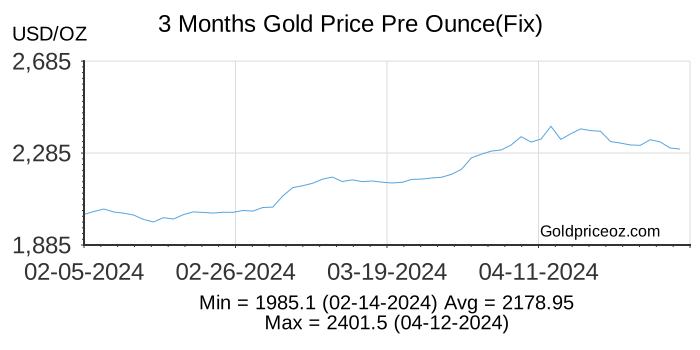
Recent market instability has raised investors' interest in gold.  If you believe the supply/demand functions in the global market for gold (some people don't) this is reflected in the price of gold.

http://www.goldpriceoz.com/goldpricegraph/usd-gold-price-per-ounce-3-months-history.png

This increase has been reflected in the performance of the S&P TSE Gold Index


Gold-based equities in the Financial Log Book have performed nicely in recent months.

Company
Purchase Price/Date
Current Price
12/02/16
% Increase YTD
% Gain/Loss Since Purchase
Abitibi Royalties RZZ
2.57
2015-11-20
3.4
1.2
31.4
Silver Wheaton SLW
12.37
2007/09/04
21.15
23
71

Speculation in several other companies has been profitable.


Here is a list of companies on my radar screen.  It was developed as a result of looking for enterprises with characteristics noted later on in this commentary.

Asanko Gold
Franco Nevada
GoldQuest Mining
McEwan Mining
Premier Gold Mines
Pretium Resources
Oceana Gold
Integra Gold

The companies generally share the following characteristics:

  • great management with a good track record
  • operations in stable jurisdictions where the rule of law prevails
  • lower all-in sustaining costs 
  • good balance sheets and/or an ability to secure additional funding for development
I prefer companies with active operations and a income stream. Why?
  • technical/operating risks are lower with the result that additional funding can be secured at lower rates
  • in some instances, production can be ramped up relatively quickly to profit from higher prices during boom times
There are some exceptions to the above-noted generalities.  Asanko Gold is in a fairly stable African country but the upside potential warrants the additional risk of geopolitical uncertainty.  Pretium Resources is scheduled for production in 2017.  It is fully permitted and appears to have good access to funding.  Its main attraction is the size and quality of its high grade reserves and the prospect that they will be increased over time.

A host of other variables figure in my decisions:
  • The possibility of a take-over.  Some companies are likely take-over candidates.  Small to mid-sized companies with significant reserves sometimes fall within the sights of larger entities seeking to replenish their reserves with less risk than greenfield exploration activities.  In this respect, I look for small mines (preferably under development) which are adjacent to larger ones.  Sometimes the attraction of reducing costs through the sharing of processing facilities leads larger companies to absorb their smaller brethren.  This is interesting:How Are North American Gold Miners Placed?
  • I prefer companies which are located in established gold fields. The reasons: an established infrastructure which lowers costs, an established social fabric which facilitates regulatory approvals, community support and access to labour.
I like companies such as Franco-Nevada, a gold-focused royalty and streaming company.

Our business model is to grow the royalty portfolio with acquisitions of high quality, high margin assets limiting our downside exposure but retaining the full upside potential of higher commodity prices and/or new exploration discoveries.

The company has great management.  It is well worth viewing the most recent investor presentation: http://www.franco-nevada.com/wp-content/uploads/2016/02/Antapaccay-Precious-Metals-Stream.pdf

In these times when miners are desperate to secure financing, streaming/royalty companies are well-positioned to secure profitable contracts.

A position  in Franco Nevada was established on 2014-08-22. Since then, the price has increased by 23.9 percent (12/02/16).  I continue to hold this company.  The investor presentation outlines the company's interests - they warrant serious attention by investors seeking to invest in specific companies.

I have invested in most of the afore-mentioned companies from time to time and have taken profits as opposed to hanging on for more.  The only exception is with the royalty and streaming companies where I plan to hold on through what I sense will be a cyclical rebound in the precious metals market.  In essence my strategy involves:
  • short-term speculative ventures and profit taking based on my sense of the market action
  • longer-term investments in companies with proven revenue streams from a variety of mines located in stable jurisdictions
The result has almost negated the impact of declines in some holdings noted in the Financial Log Book.  

Note:  Other than generalized observations, I will not record this speculative activity in the Financial Log Book.